• Everything You Need to Know About Sofas and Sectionals: Styles, Materials, Pricing, and Smart Shopping Tips

    Everything You Need to Know About Sofas and Sectionals: Styles, Materials, Pricing, and Smart Shopping Tips

    When it comes to furnishing a living room, few pieces have a bigger impact than a sofa or sectional. These seating options often become the focal point of a home, serving as the place where families gather, guests relax, and everyday life unfolds. With so many designs, upholstery choices, and price points available, selecting the…


  • The Complete Guide to Furniture Styles, Materials, Costs, and Buying Tips

    IntroductionChoosing furniture shapes how a home looks and functions. This guide breaks down the most common furniture styles, construction materials, expected costs, and practical buying tips so you can make confident choices for every room. Popular Furniture Styles Materials and Construction Price Expectations (U.S. market ranges) Practical Buying Tips Styling and Placement Tips Common Mistakes…


Category: Furnitures

  • Everything You Need to Know About Sofas and Sectionals: Styles, Materials, Pricing, and Smart Shopping Tips

    Everything You Need to Know About Sofas and Sectionals: Styles, Materials, Pricing, and Smart Shopping Tips

    When it comes to furnishing a living room, few pieces have a bigger impact than a sofa or sectional. These seating options often become the focal point of a home, serving as the place where families gather, guests relax, and everyday life unfolds.

    With so many designs, upholstery choices, and price points available, selecting the right sofa can feel overwhelming. Whether you’re decorating a new home or replacing an aging couch, understanding the basics can help you make a confident and informed purchase.

    Why Choosing the Right Sofa Matters

    A sofa is more than a furniture purchase—it’s a long-term investment in comfort and functionality. The right model can improve the appearance of your living space, provide years of relaxation, and accommodate your household’s lifestyle.

    Sectionals offer additional flexibility by maximizing seating capacity and efficiently utilizing room layouts, making them especially popular in modern homes.

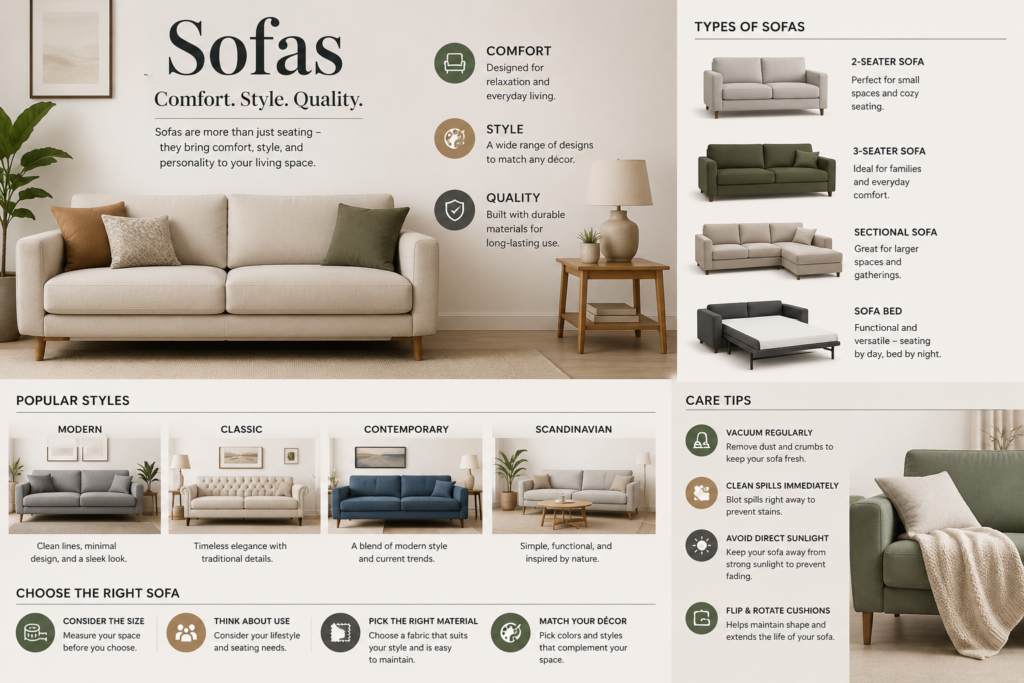
    Common Sofa and Sectional Styles

    Contemporary Designs

    Contemporary sofas focus on simplicity, clean silhouettes, and practical comfort. These pieces typically feature neutral tones, streamlined shapes, and minimal decorative details.

    Classic Traditional Sofas

    Traditional sofas are known for their timeless elegance. Features such as rolled arms, button tufting, carved accents, and rich upholstery create a sophisticated appearance that never goes out of style.

    Mid-Century Modern Seating

    Inspired by the design trends of the 1950s and 1960s, mid-century modern sofas often include tapered wooden legs, sleek lines, and a balance between style and functionality.

    Modular Sectionals

    Modular sectionals consist of separate components that can be arranged in various configurations. Their adaptability makes them an excellent choice for homeowners who frequently rearrange furniture or move to different spaces.

    Reclining Sofas

    For those who prioritize comfort, reclining sofas and sectionals provide adjustable seating positions that make movie nights and relaxation sessions even more enjoyable.

    Chaise Sectionals

    A chaise sectional combines traditional seating with an extended lounge area, offering additional comfort for stretching out and unwinding.

    Understanding Upholstery Materials

    The material covering your sofa influences its appearance, comfort level, maintenance requirements, and lifespan.

    Genuine Leather

    Leather remains a premium upholstery option due to its durability and timeless appeal. Over time, quality leather develops a distinctive character that many homeowners appreciate.

    Advantages:

    • Long-lasting durability
    • Easy surface cleaning
    • Luxurious appearance

    Considerations:

    • Higher initial investment
    • Sensitive to extreme temperatures

    Fabric Upholstery

    Fabric sofas remain a favorite because they are comfortable, versatile, and available in countless colors and textures.

    Advantages:

    • Soft and inviting
    • Wide design selection
    • Budget-friendly options available

    Considerations:

    • May require more frequent cleaning
    • Certain fabrics can absorb stains

    Performance Fabrics

    Engineered for active households, performance fabrics resist spills, stains, and everyday wear while maintaining a comfortable feel.

    Microfiber

    Microfiber is a practical option for families with children or pets because it offers durability and relatively easy maintenance.

    Velvet

    Velvet upholstery adds depth, texture, and elegance to a room. It is often chosen for homeowners seeking a more upscale and refined aesthetic.

    How Much Should You Expect to Spend?

    Sofa and sectional prices vary based on size, materials, construction quality, and brand reputation.

    Price RangeTypical Features
    $300–$800Basic construction and entry-level materials
    $800–$2,000Improved durability, comfort, and upholstery options
    $2,000–$5,000Premium materials, larger configurations, and designer styles
    $5,000+Luxury craftsmanship, custom options, and high-end brands

    While budget-friendly models may serve short-term needs, investing in better construction often results in superior longevity and comfort.

    Smart Buying Tips

    Measure Before You Buy

    One of the most common furniture-shopping mistakes is purchasing a sofa that doesn’t fit properly. Measure your room, doorways, staircases, and hallways before placing an order.

    Think About Daily Use

    Your lifestyle should influence your selection. Homes with pets, children, or frequent visitors may benefit from durable, stain-resistant materials.

    Evaluate Comfort

    Appearance is important, but comfort matters just as much. Pay attention to seat depth, cushion firmness, and back support when comparing options.

    Examine the Frame

    A well-built frame is essential for long-term durability. Hardwood frames generally outperform lower-quality engineered materials.

    Consider Future Flexibility

    If your living situation may change, a modular sectional can provide greater adaptability than a fixed sofa design.

    Coordinate with Your Interior Design

    Select colors, materials, and shapes that complement your existing décor. A cohesive design creates a more polished and inviting atmosphere.

    Popular Configuration Options

    Standard Sofa

    A traditional three-seat sofa remains one of the most versatile options for living rooms of all sizes.

    Loveseat

    Designed for two people, loveseats work well in apartments, offices, bedrooms, and smaller seating areas.

    L-Shaped Sectional

    This layout efficiently utilizes corner space while providing generous seating capacity.

    U-Shaped Sectional

    Ideal for large families and entertainment spaces, U-shaped sectionals create a natural gathering area.

    Chaise Lounge Sectional

    This configuration combines ample seating with an extended relaxation area for added comfort.

    Eco-Friendly Furniture Choices

    Sustainability is becoming increasingly important in the furniture industry. Many manufacturers now offer sofas built with responsibly sourced wood, recycled materials, and environmentally conscious fabrics.

    Choosing sustainable furniture not only supports responsible manufacturing practices but can also contribute to a healthier indoor environment.

    Final Thoughts

    A sofa or sectional is often one of the most-used pieces of furniture in any home. Taking the time to understand different styles, upholstery materials, price ranges, and construction methods can help you make a purchase that delivers both comfort and value.

    Whether you prefer a spacious sectional for family gatherings, a sleek contemporary sofa, or a luxurious leather centerpiece, selecting the right seating can enhance your home’s comfort and style for years to come.

  • The Complete Guide to Furniture Styles, Materials, Costs, and Buying Tips

    Introduction
    Choosing furniture shapes how a home looks and functions. This guide breaks down the most common furniture styles, construction materials, expected costs, and practical buying tips so you can make confident choices for every room.

    Popular Furniture Styles

    • Modern/Contemporary: Clean lines, minimal ornamentation, neutral palettes, and emphasis on function. Common materials: metal, glass, engineered wood, leather.
    • Mid-Century Modern: Low profiles, tapered legs, organic shapes, and warm wood finishes (walnut, teak). Balanced blend of form and comfort.
    • Traditional: Ornate details, carved wood, rolled arms, rich finishes. Often uses solid hardwoods and classic upholstery patterns.
    • Scandinavian: Light tones, simple silhouettes, natural materials, and functional design. Prioritizes light woods like birch and ash.
    • Industrial: Raw finishes, exposed metal frames, reclaimed wood, and utilitarian hardware. Durable, urban look.
    • Rustic/Farmhouse: Distressed wood, chunky proportions, warm finishes, and handcrafted textures. Often uses pine, oak, or reclaimed timber.
    • Transitional: Mixes traditional and contemporary elements for flexible, timeless rooms.

    Materials and Construction

    • Solid Wood: Durable and repairable. Species matter—oak and maple are hard-wearing; pine is softer and less costly. Expect higher price and longer lifespan.
    • Veneered/Engineered Wood (Plywood, MDF, particleboard): Cost-effective, stable when properly made. Ply with a quality veneer can look like solid wood at a lower price.
    • Metal: Steel and aluminum frames are strong and modern; powder-coated finishes resist corrosion. Used for bases, frames, and industrial designs.
    • Upholstery Fabrics: Natural (linen, cotton, leather) provide breathability and classic look; synthetics (polyester, microfiber) offer stain resistance and durability. Check rub counts and cleaning codes.
    • Foam and Springs: High-resilience foam and sinuous springs or pocket coils improve seating comfort and longevity. Examine density and cushioning layers.
    • Glass and Stone: Tempered glass and engineered stone tops add a premium look for tables and counters but show wear differently and require care.

    Price Expectations (U.S. market ranges)

    • Entry-level (budget): $100–$700 for sofas and beds; mass-produced, often engineered wood or lower-density upholstery.
    • Mid-range: $700–$2,500 for sofas and beds; better construction, solid wood frames or high-quality plywood, higher-grade foams, and better fabrics.
    • High-end: $2,500+ for sofas and $1,500+ for dining tables; handcrafted joinery, hardwoods, premium upholstery, designer brands.
      Note: Prices vary with materials, size, brand, and region. Accent pieces like chairs, side tables, and dressers scale lower but follow similar tiers.

    Practical Buying Tips

    • Measure twice: Create a floor plan and measure doorways, staircases, and elevator clearances. Include walking space and set distances (e.g., 18 inches from couch to coffee table).
    • Test for comfort and build: Sit, lean, and open drawers if possible. Check joinery—dovetails, solid corner blocks, and mortise-and-tenon are signs of quality.
    • Prioritize frame and suspension: A kiln-dried hardwood frame and eight-way hand-tied or high-quality sinuous springs last longer than flimsy frames.
    • Inspect finishes: Look for even stain/paint, smooth edges, and consistent hardware. For veneer, ensure seams are aligned.
    • Evaluate upholstery durability: Look for fabric rub counts (15,000+ for residential), stain-resistant treatments, and removable covers for washing.
    • Think modular and multifunctional: Storage beds, extendable tables, or sectional sofas can increase utility in smaller homes.
    • Plan for maintenance: Solid wood needs occasional wax or oil; upholstered pieces benefit from protective treatments and regular cleaning; metal may need touch-up paint.
    • Consider sustainability: Look for FSC-certified wood, low-VOC finishes, and brands with transparent supply chains if environmental impact matters.
    • Factor total cost: Include delivery, assembly, warranties, and expected maintenance when comparing prices.
    • Warranties and returns: Read warranty terms and return policies. A longer warranty often indicates confidence in construction.

    Styling and Placement Tips

    • Balance scale: Match furniture size to room scale—oversized pieces overwhelm small rooms, petite pieces feel lost in large spaces.
    • Create conversation zones: Arrange seating to encourage interaction; maintain sightlines to focal points like windows or fireplaces.
    • Layer textures: Combine wood, metal, textiles, and glass for visual depth.
    • Color and cohesion: Use a palette with 2–3 dominant colors and varying textures to keep rooms harmonious without monotony.

    Common Mistakes to Avoid

    • Buying based on photos alone: Photos can misrepresent scale and finish.
    • Ignoring ergonomics: Aesthetics without comfort leads to unused pieces.
    • Skipping measurements: Many returns and exchanges stem from misfit furniture.
    • Choosing the cheapest option for frequently used items: Daily-use furniture (sofas, beds) is worth investing in for longevity and comfort.

    Brief FAQ

    • How long should good furniture last? With quality construction, sofas and beds can last 7–15 years; solid wood tables and cabinets can last decades with care.
    • Is leather worth the cost? Quality leather is durable, ages attractively, and can outperform many fabrics in longevity and cleanability.
    • Can I mix styles? Yes—use scale, color, and material to create cohesion between different styles.

    Conclusion
    Smart furniture choices combine style, construction, and function. Prioritize quality where you sit and sleep most, measure carefully, and choose materials that fit your lifestyle and maintenance preferences. With these guidelines you’ll make purchases that look great and endure.